Squinting At Time Series
At the aggregate level, the labor market still looks pretty healthy.
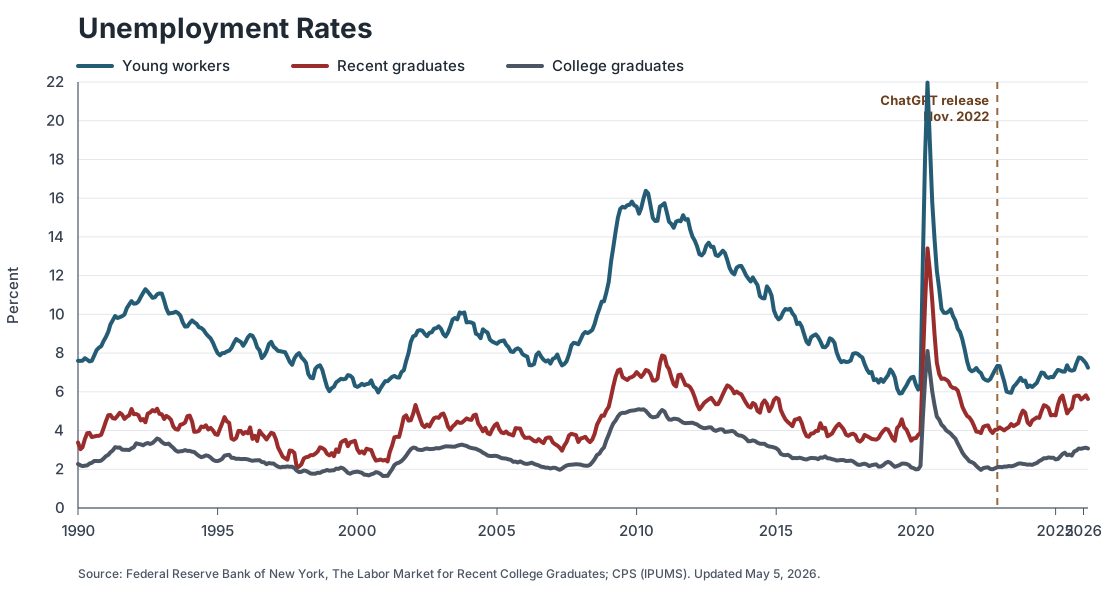
If AI is already reshaping the labor market, it is not yet obvious in the broad aggregates.
Evidence From Exposed Workers Is Contested
- Demand changes among adopting firms are difficult to interpret because adoption is endogenous.
- There is a clear trend in "AI-washing" layoff explanations.
- Post-pandemic changes in the nature of work make attribution even harder.
Empirical challenge: we are left with either cross-occupation DiD, where exclusion is tricky, or cross-firm DiD, where adoption is a choice.
Either one gives us relative effects.
How Substitutable Is AI?
My guess is that for most sectors \(\sigma \sim 1\) at a high level, at least right now.
- Why? This implies that AI cost shares should be staying roughly the same or increasing slightly, which seems consistent with reality.
- JPMorgan says technology expense is expected to be about $19.8B, up 10% year over year, while rising by less than 1 percentage point as a share of total costs.
- Most of the massive spending seems focused on the hyperscalers building out AI models.
It would be useful to formalize this with real data.
But Total Labor Demand Is Mostly About Scale
Productivity improvements lower unit costs, which can expand output.
- If \(\eta > \sigma\), scale effects can dominate substitution.
- If \(\eta < \sigma\), substitution dominates.
- Near-zero net effects are plausible when demand elasticity and substitution are similar.
- For banking services, \(\eta \sim 1\) does not seem crazy, which may be close to the JPMorgan scenario.
The key question is not simply whether AI substitutes for labor. It is whether cheaper output expands demand enough to offset that substitution.
Cost Shares May Still Be Small
JPMorgan expected 2026 technology expense, against about $105B in adjusted expenses. AI is likely a small part of total tech spending.
UnitedHealth AI-related initiatives as a share of revenue, roughly 2.4 percent of operating costs.
Even if AI is productive, aggregate labor-market impacts may be small when AI cost shares are still tiny.
2. Putting The Cart Before The Horse
Do We Know AI Is Reducing Unit Costs?
All of this analysis requires a world where AI really is decreasing unit costs.
- Credible studies estimate important productivity impacts of AI, but we know it's not always that simple.
- Workplaces are not set up right now to solve the implicit agency issues (just ask my research assistants).
- So I am not sure we know that \(\Delta \theta_{AI}\) is big in production yet.
Activity Is Going Up
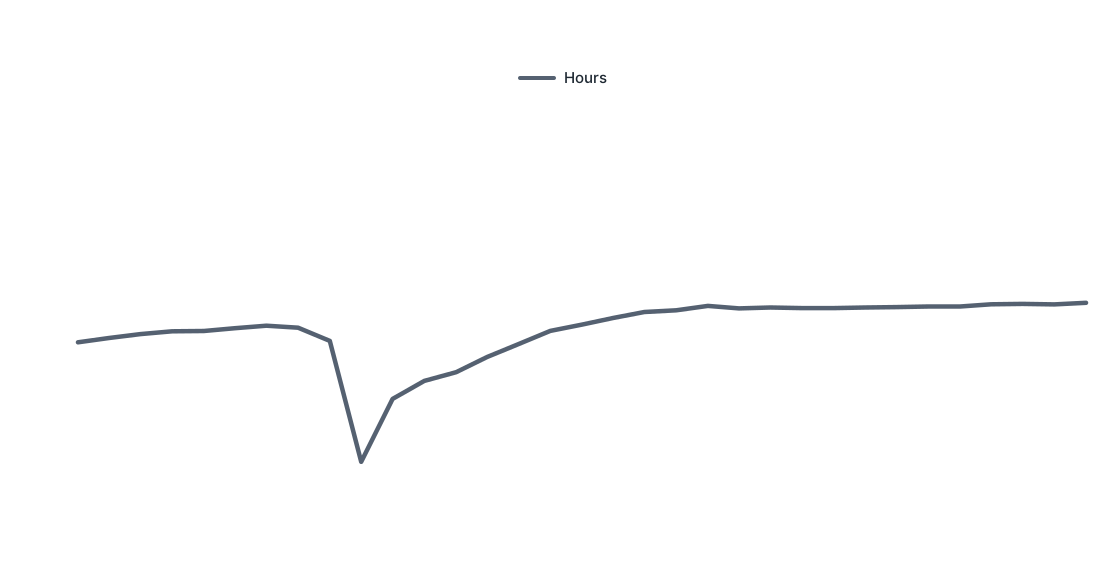
It certainly seems like total coding activity is rising.
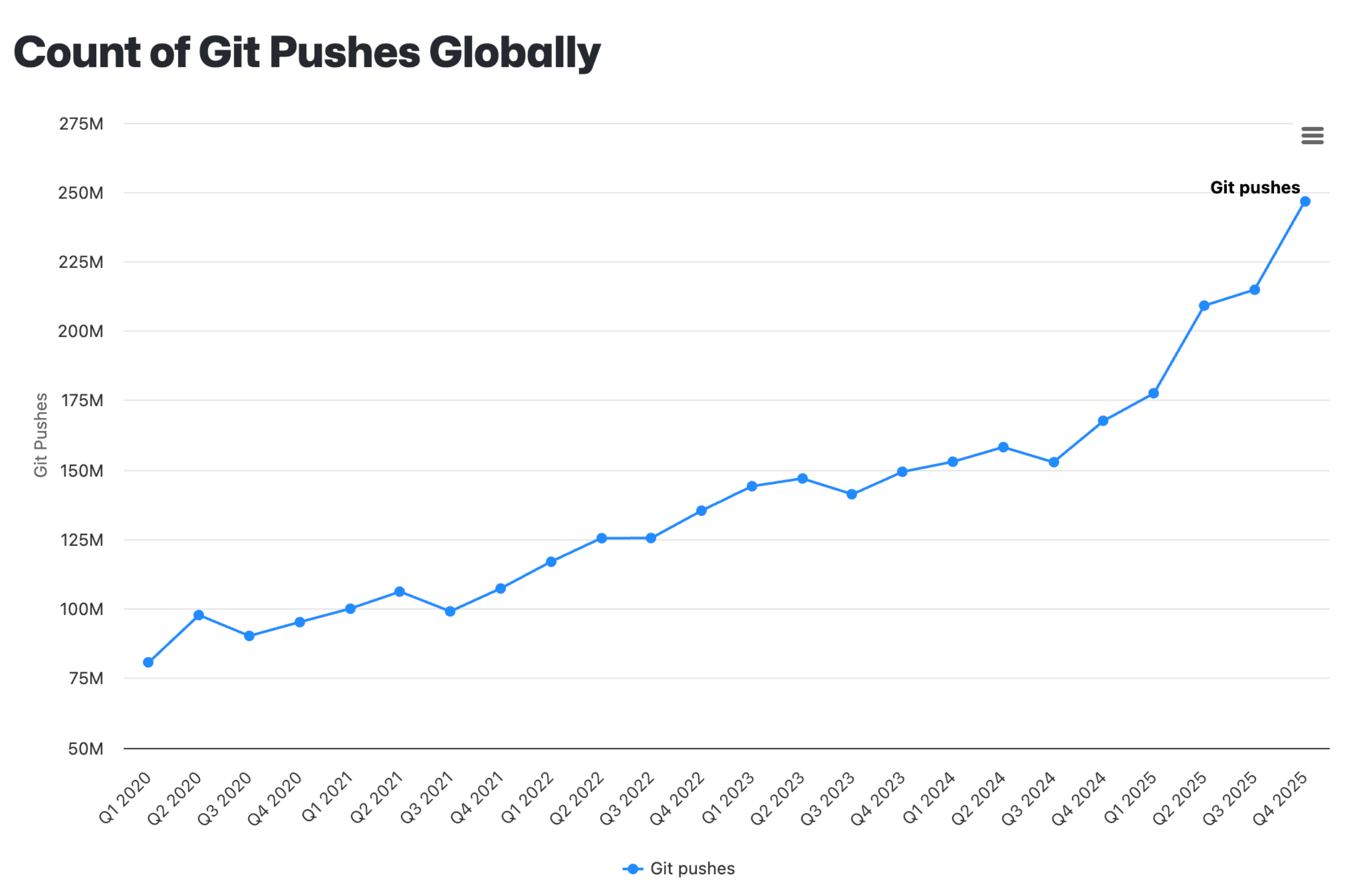
But are we getting more value? More activity is not the same thing as more useful output.
Where Is The Value Showing Up?
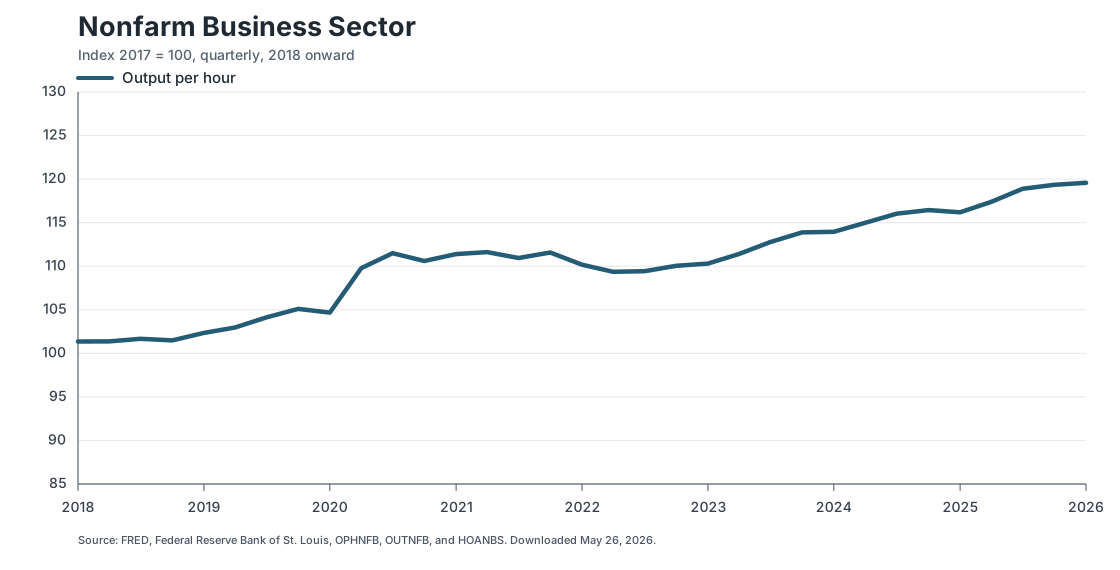
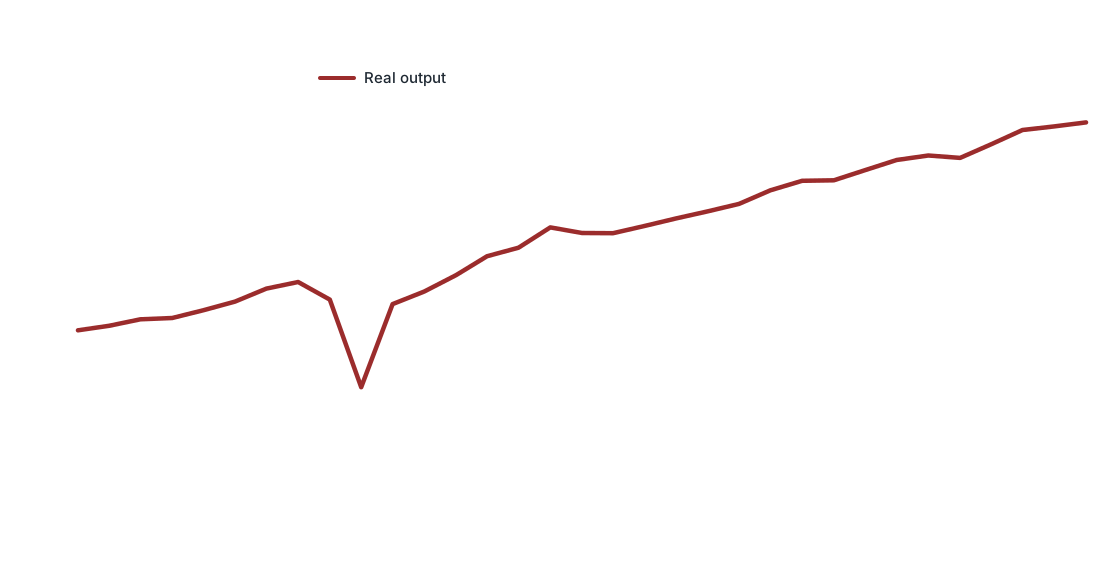
Where Is The Value Showing Up?
- Where are the new products and services? New ideas?
- We can't even decide if the unit distance conjecture is a big deal.
- Arguably most consumer surplus from AI is from the tools themselves (e.g., ChatGPT as therapy), not as inputs in production of other stuff.
It is hard to expect major labor-market shifts before firms have figured out how to reliably capture the productivity boost.
3. Would We Know It When We Saw It?
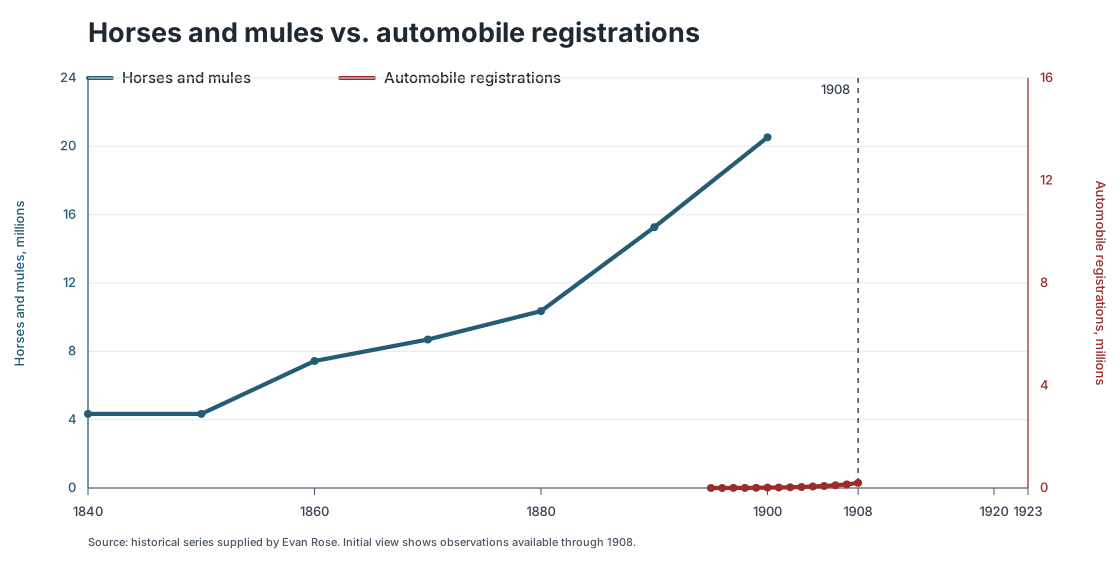
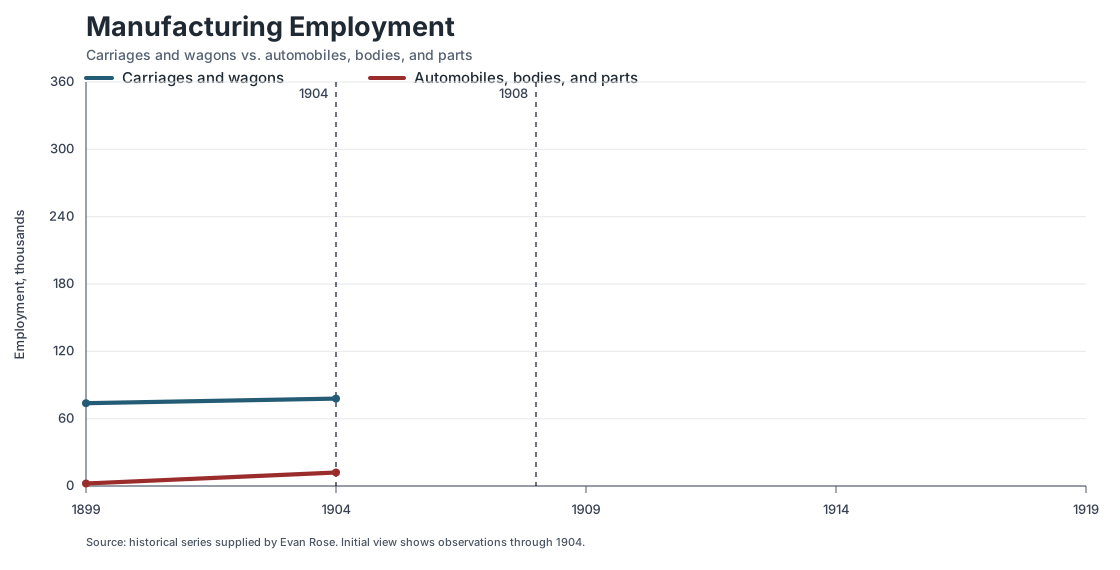
Imagine It Is 1908

Carriages, Wagons, And Automobiles
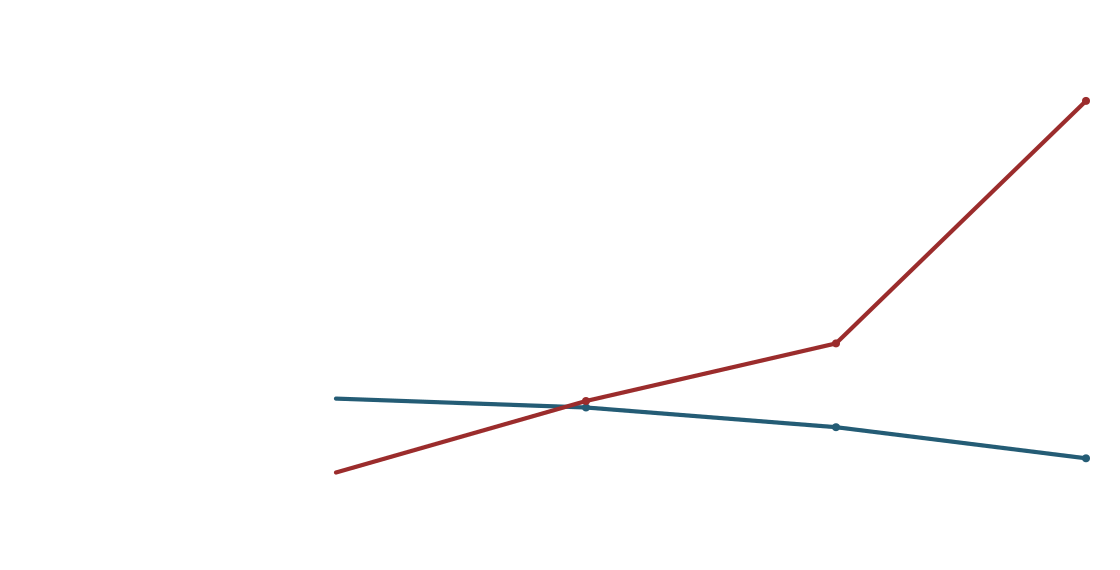
Productivity Advantage Obvious By 1920
Census estimates for spring plowing costs per acre:
Horses
Tractor
- Yet the horse and mule population peaked somewhere between 1910 and 1920.
- Still 2x as many horses in 1920 as there were automobile registrations.
Yes, maybe gen-AI will be faster than the auto transition, but also maybe not? It's a lot easier to lay off your horse than a human.
Another Example: Automatic Elevators
Don't cheat if you already know the answer.
- Automatic elevators were created in the second half of the 19th century.
- We had automatic elevators in the 1920s.
- The Empire State Building opened in 1931 with Otis signal-control elevators: "electrical brains" and "copper-wire nerves."
When do you think elevator operator employment peaked?
Elevator Operators Kept Rising
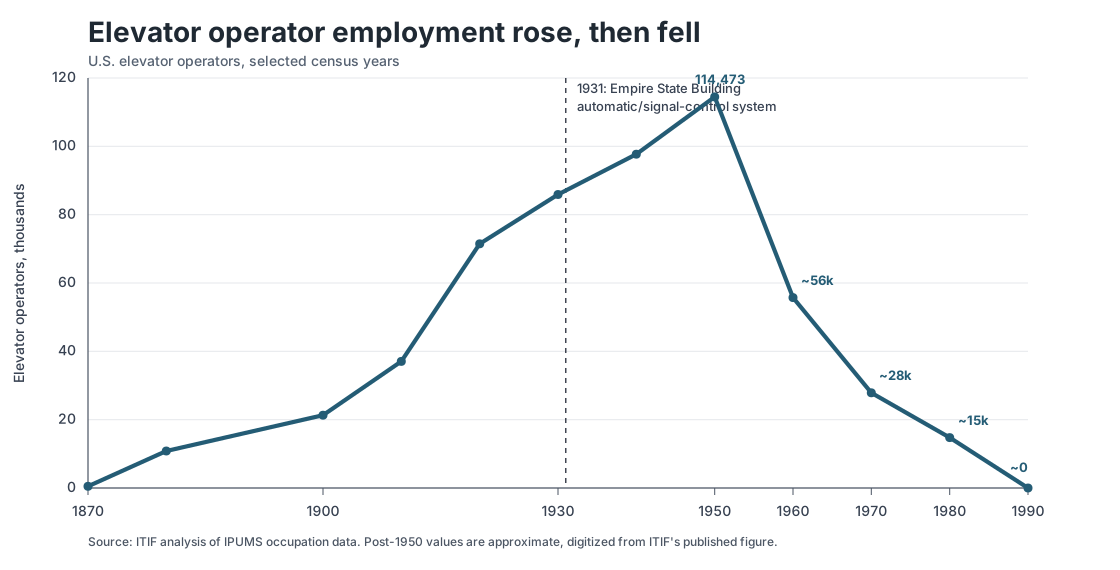
The answer is 1950! At that point virtually 100% of new installs switched to automatic in the space of a couple of years.
Are we in 1930, 1940, or 1950 for generative AI? I'm not sure.
Managing The Transition
I am not an AI skeptic. Structural change is coming! What should we do about it?
There is only one answer: reallocation. The work people do will have to change, just as it has over the last hundred fifty years and more.
What Do We Actually Know How To Do?
This can be painful, and unfortunately we know very little about how to make it easier.
- Almost all the job-training literature is about programs targeting people with limited formal education or labor-market experience and low incomes.
- Think women on AFDC, people in addiction treatment, or the recently incarcerated.
- That evidence base is a poor guide for many AI-exposed white-collar workers.
So What Do We Do?
What do we do for people with roughly 10 years of white-collar experience?
- Send them back to college?
- Short training?
- Nothing?
The answer is not so obvious to me. But clearly we need better evidence on how workers in the sectors most exposed to AI can transition, where they can go, and how.
Takeaways
- The data today do not yet show an obvious AI labor-market rupture.
- Near-zero effects are consistent with balanced scale and substitution, small cost shares, or unrealized productivity gains.
- Historical transitions warn against over-reading the early period.
- We need much better evidence on reallocation for AI-exposed workers.
Comments For Today